Free Quote

Setup


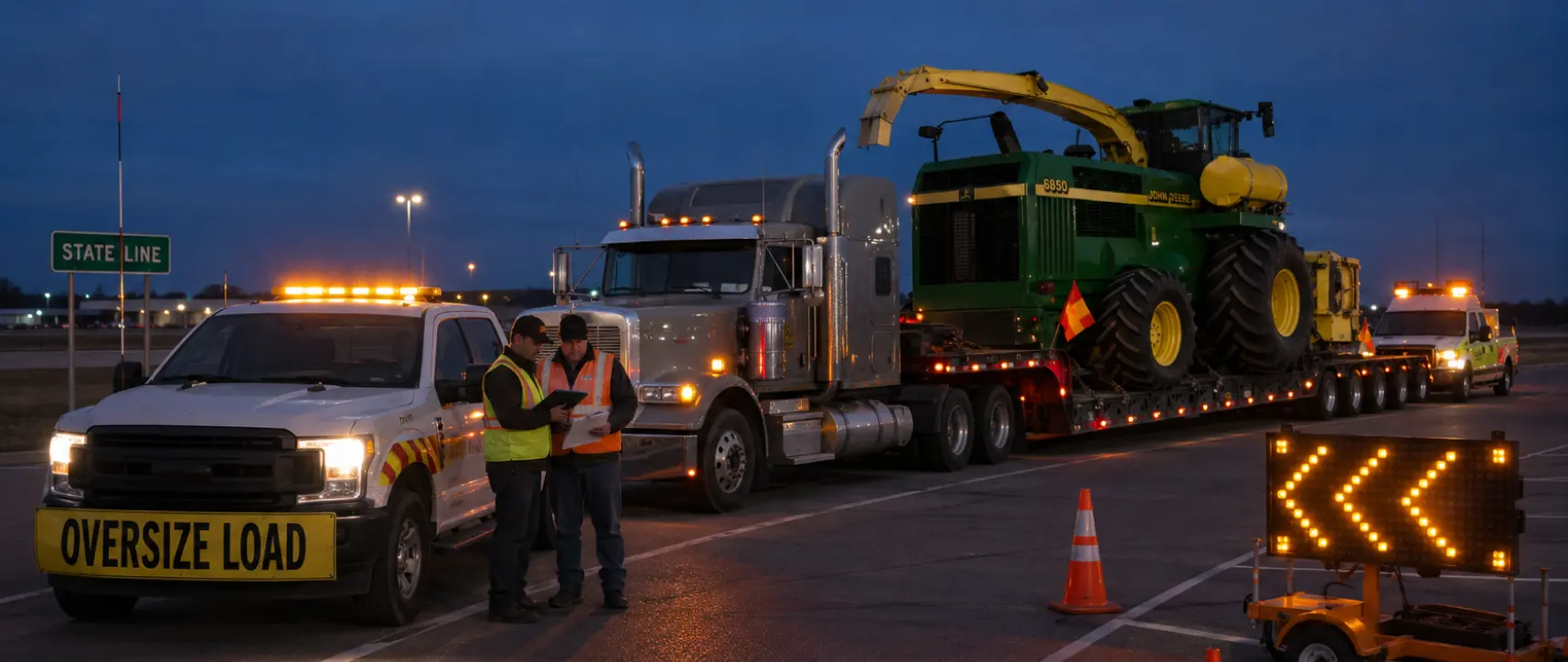
Drivers face severe enforcement actions navigating dimensional freight. Scale houses target geometric violations aggressively. Confusion regarding dimension thresholds generates catastrophic financial penalties. Securing wide load permits requires absolute mathematical certainty. Drivers constantly question exact trigger points mandating special documentation. Standard commercial widths terminate at 102 inches. Pushing cargo 103 inches across trailer decks instantly triggers dimensional protocols. State commercial vehicle enforcement divisions deploy physical tape measures. Scale masters measure payload extreme edges, including protruding chains, binders, and protective tarps.
Federal highway systems maintain unified width thresholds. State secondary roads utilize independent geometric limitations. Operating any dot wide load off interstate corridors exposes motor carriers to localized restrictions. County bridges often restrict widths exceeding 96 inches. State routing software calculates lane widths against submitted cargo dimensions. If cargo occupies opposing traffic lanes, states mandate sworn police escorts. Ignorance regarding specific state thresholds provides zero legal defense during scale house inspections. Dimension data dictates operational legality.
Night operations introduce severe geometric risks. Visibility drops, hiding low clearances and tight intersection radiuses. Consequently, state DOT manuals strictly govern night movement. Most jurisdictions ban wide movement 30 minutes after sunset until 30 minutes before sunrise. Drivers must locate secure parking before twilight. However, specific configurations receive night travel authorizations. Nevada and Texas allow specific dimensional profiles continuous movement. Operating under any wideload permit requires reading specific condition sheets attached to routing documents. Night travel authorizations demand active illuminated strobes, amber flashing lights, and synchronized escort vehicles.
Curfews extend beyond daily solar cycles. Metropolitan areas implement rigid rush-hour blackouts. Moving dimensional freight through Atlanta or Chicago between 0600-0900 and 1500-1800 guarantees immediate citations. Holiday restrictions freeze movement entirely. Federal holidays trigger statewide embargoes lasting 72 hours. Dispatchers must calculate precise transit windows. Stranded drivers occupy weigh station parking lots during embargo periods. Planning logistics requires synchronizing legal transit hours across multiple independent jurisdictions simultaneously.
Mechanical failures destroy delivery timelines. Blown turbos or shredded drive belts force drivers onto highway shoulders. Hooking replacement tractors to loaded trailers invalidates active paperwork instantly. Approvals lock directly to specific Vehicle Identification Numbers (VINs) and license plates. Law enforcement officers cross-reference VIN plates against printed documents. Mismatched digits trigger out-of-service orders. Every dot wide load permit requires formal revision processing before resuming transit.
State clerks charge secondary application fees processing equipment swaps. Drivers must remain parked until dispatch secures revised documents. Swapping trailers presents identical legal friction. Changing trailer configurations alters turning radiuses and off-tracking metrics. States must recalculate bridge geometry based on new equipment specifications. Unreported equipment changes constitute illegal transportation. Highway patrol interceptors impound unpermitted configurations. Strict fleet discipline prevents administrative grounding.
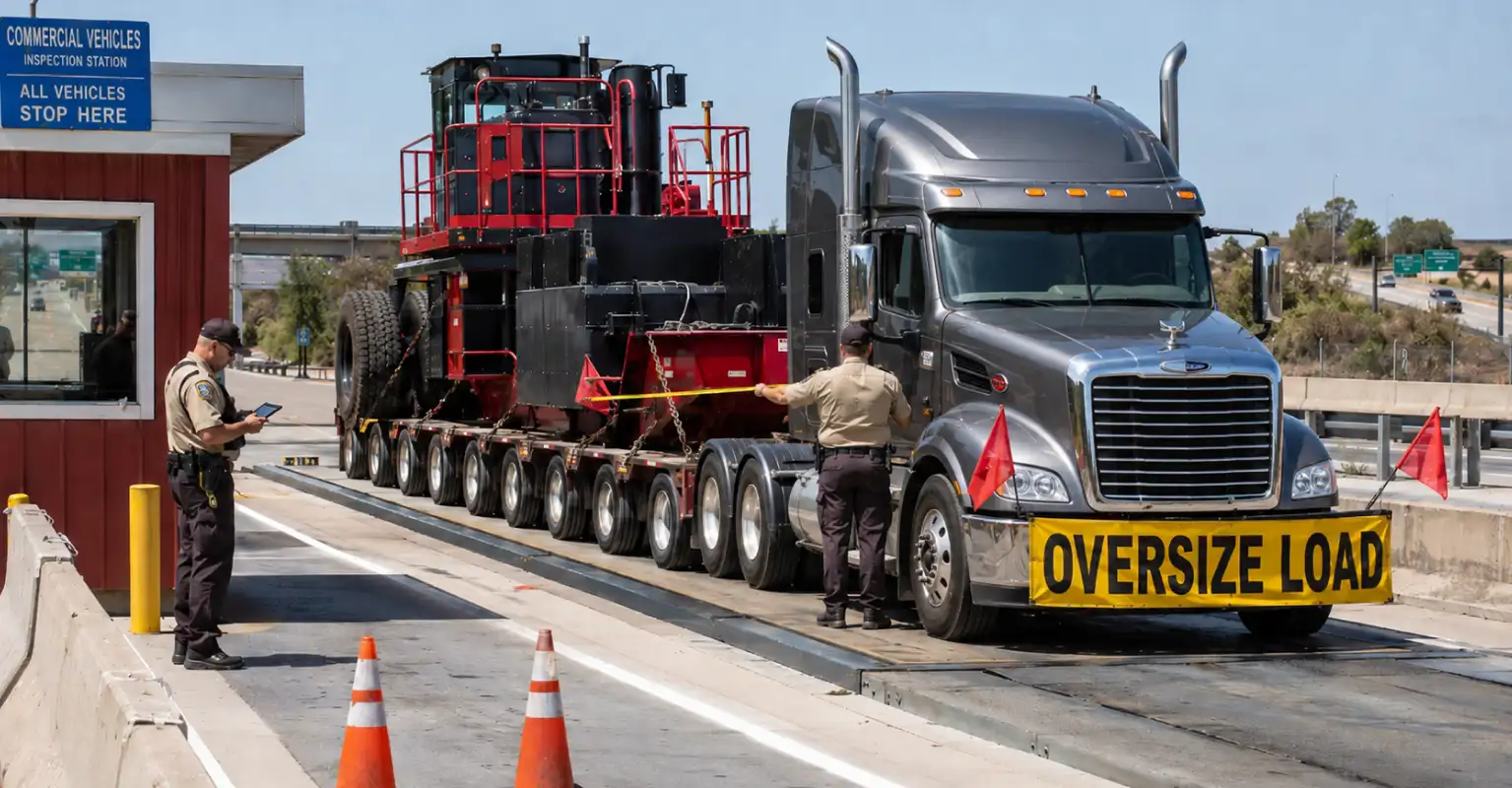
Interstate borders create massive compliance friction. State legislatures design independent escort requirements. Moving 12-foot wide freight might require zero escorts in Ohio but demand front civilian pilot cars entering Indiana. Drivers crossing state lines without required escorts face immediate detention. Multi-state routes demand synchronized escort logistics. Front pilot cars deploy fiberglass height poles. Rear pilot cars manage trailing civilian traffic. Drivers must communicate continuously with escort teams via CB radio channels.
Extreme widths trigger police escort mandates. Local municipalities require sworn officers managing intersection traffic lights. Coordinating police escorts requires weeks of advanced scheduling. Missing scheduled police rendezvous points resets routing timelines entirely. Police escorts assume command over convoy movement. Drivers follow officer directives strictly. Utilizing professional permitting agencies ensures seamless border transitions. Agencies align civilian pilot cars, police officers, and utility bucket trucks perfectly across jurisdictional lines.
Approved paperwork never guarantees physical passage. State routing software utilizes historical infrastructure databases. Automated systems miss recent construction changes, temporary concrete barriers, or sagging utility lines. Drivers maintain ultimate liability regarding physical clearance. Striking overpasses while following approved routes still generates massive carrier liability. Municipalities sue motor carriers for infrastructure damage regardless of authorized routing. Proceeding blindly into tight geometric constraints causes catastrophic accidents.
Navigating superload dimensions demands third-party route surveys. Surveyors physically drive proposed paths measuring exact bridge heights and roundabout radiuses. Escort height poles provide final physical warnings. When height poles strike infrastructure, truck drivers initiate emergency braking protocols. Drivers must possess extreme spatial awareness. Maneuvering modular trailers through urban grids requires precise steering inputs. Relying solely on printed documents guarantees collisions. Visual confirmation prevents destruction.
Weather phenomena rewrite operational parameters dynamically. High-profile cargo acts like giant sails during severe wind events. Crosswinds exceeding 25 miles per hour mandate immediate parking protocols. State highway patrols monitor anemometers closely. Moving restricted freight during high-wind events triggers severe federal fines. Winter weather introduces identical friction. Snowpack alters overpass clearances. Accumulating ice raises road surfaces, erasing vital vertical clearance inches. States issue sudden weather embargoes, freezing dimensional movement statewide.
Route deviation causes immediate document invalidation. Detouring around traffic accidents without state authorization constitutes illegal movement. GPS telematics track exact truck movements. Law enforcement utilizes telematics data during compliance audits. If drivers exit approved paths searching for fuel or food, officers issue off-route citations. Securing fuel requires precise pre-planning along authorized corridors. Maintaining strict route discipline prevents enforcement penalties. Accurate documentation ensures legal transit, protects carrier safety scores, and preserves heavy haul margins.
Scale houses target visual violations first. Missing banners trigger mandatory commercial vehicle inspections. DOT inspectors monitor highway traffic looking for specific warning geometry. Operating heavy equipment requires precise visual indicators. Missing lettering means automatic out-of-service violations. Federal guidelines dictate exact brush stroke width, color contrast, and mounting angles. Banners must display solid black lettering on highway-yellow backgrounds. Faded paint guarantees citations. Scale masters ground trucks immediately upon visual failure.
Mirror extensions represent another critical visual check. States mandate mirror expanders when payload width obscures rear visibility. If payload blocks rear sightlines, DOT officers issue immediate grounding orders. Drivers must extend side mirrors outward past payload dimensions. Compliance prevents blind spot collisions during lane shifts. Extended mirrors provide necessary angles tracking trailer wheel off-tracking around tight curves. Flawless exterior compliance forces officers to wave trucks past scale pads. Synchronizing visual markers with state routing documents ensures legal transit.
The efficiency of your daily broker and ways to check their credibility
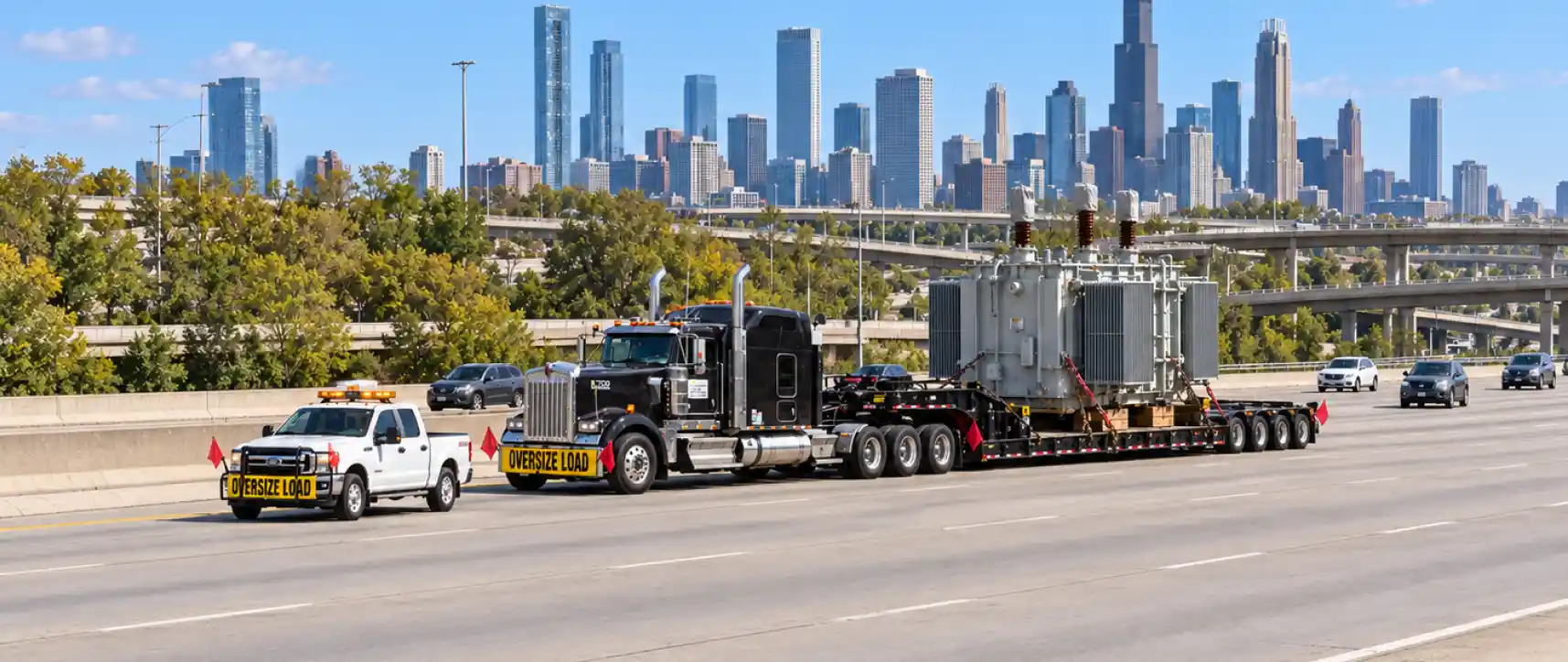
Oversize load travel windows vary by state, city, and route. Learn how rush-hour curfews and local restrictions affect interstate haul planning.
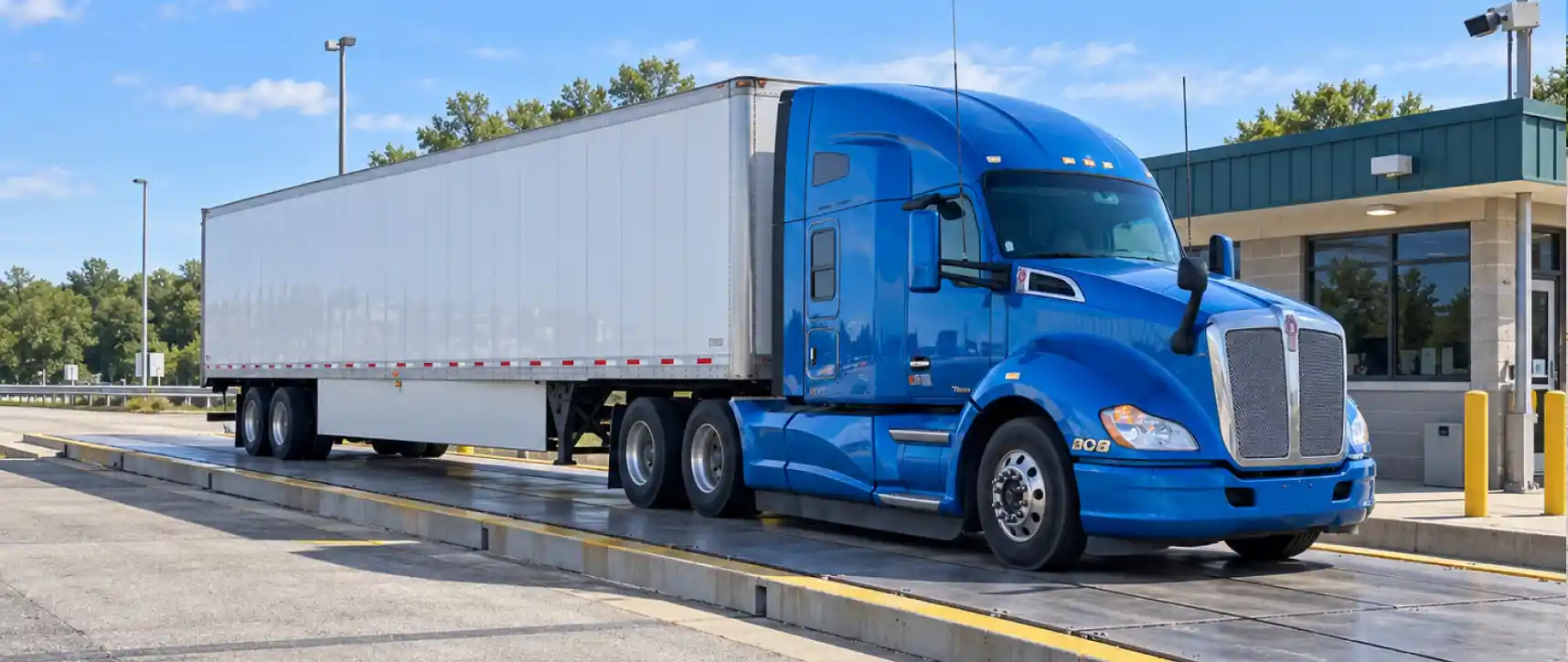
Understand US commercial truck weight limits, from gross vehicle weight to axle loads, state exceptions, and overweight permit requirements.
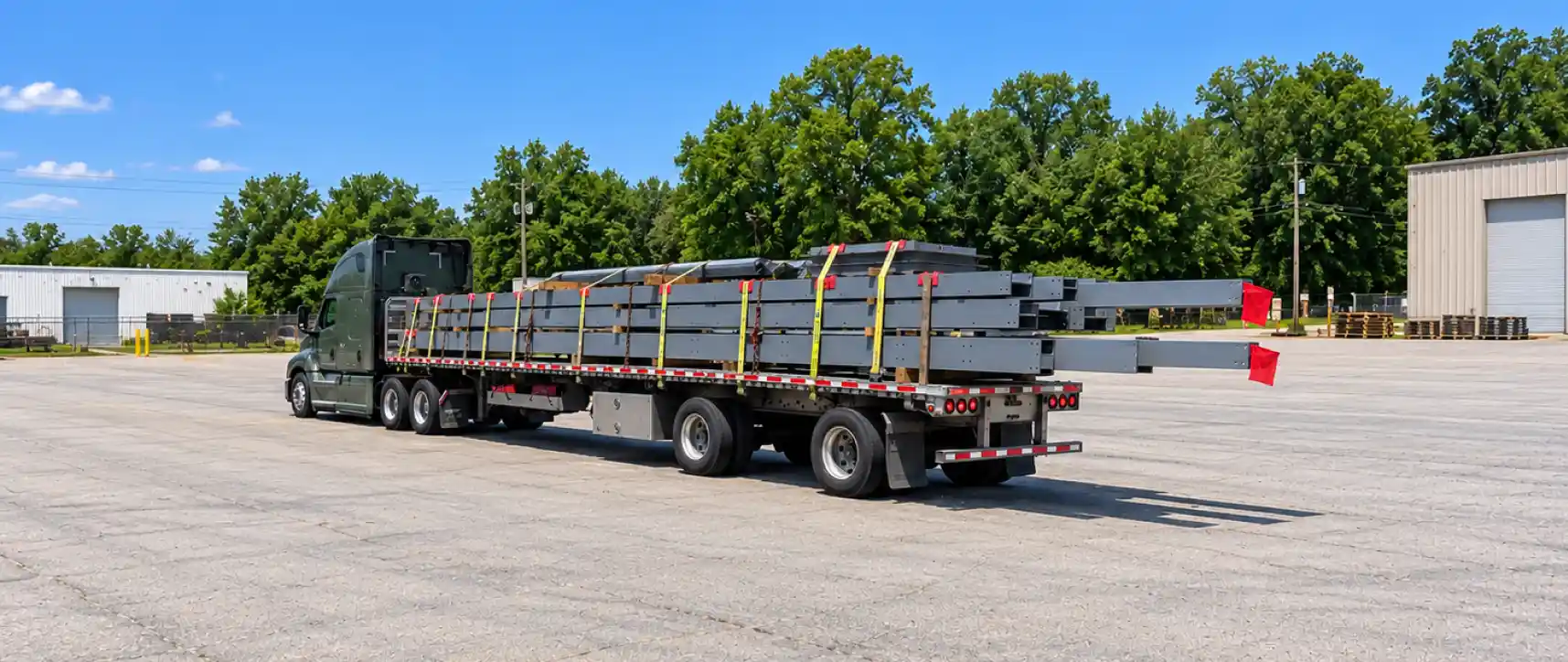
When does a long load require a permit? Learn how trailer length, cargo overhang, state rules, and escort requirements affect your next haul.
Oversize load travel windows vary by state, city, and route. Learn how rush-hour curfews and local restrictions affect interstate haul planning.
Understand US commercial truck weight limits, from gross vehicle weight to axle loads, state exceptions, and overweight permit requirements.
When does a long load require a permit? Learn how trailer length, cargo overhang, state rules, and escort requirements affect your next haul.