Free Quote

Setup



Moving colossal freight across multiple state lines tests logistics professionals instantly. Crossing borders means discarding previous rulebooks. What travels perfectly legal inside Texas suddenly triggers massive violations entering Louisiana. Successful oversize load transportation demands predicting obstacles hundreds of miles ahead. Dispatchers cannot rely upon standard consumer GPS applications. Moving standard dry vans requires basic mileage calculations; however, heavy hauling demands structural engineering comprehension alongside deep regulatory knowledge. Mapping an accurate oversize load route requires understanding exact pavement tolerances, bridge weight capacities, and municipal curfews.
Every state DOT operates independently, creating massive regulatory friction for interstate carriers. Minor dimensional shifts trigger completely different compliance requirements. Pennsylvania might mandate rear escort vehicles for your specific width, while neighboring Ohio requires both front and rear pilot cars plus flashing amber strobes. Proper oversize load routing requires aligning these conflicting mandates into one seamless transit plan. Dispatchers must study axle spacing restrictions, checking exactly how weight distributes across tire groups. State engineers calculate pavement stress differently, meaning legal configurations change instantly at border crossings.
Top-tier oversize trucking fleets compile exact equipment profiles long before submitting permit applications.Routing specialists aggressively verify overall gross tonnage, exact trailer length, kingpin-to-rear-axle spacing, plus extreme overhang limits. Pinpoint mathematical accuracy actively prevents disastrous roadside impoundments. State troopers measure physical freight ruthlessly at weigh stations, punishing discrepancies heavily. Submitting inaccurate dimensions guarantees immediate permit revocation, stranding equipment indefinitely while administrative penalties accumulate.
Standard digital mapping tools destroy heavy haul operations. Commercial truck route planning software helps standard freight, but superloads require extreme granular detail. Professional planners conduct physical route surveys, driving intended paths beforehand. They measure overpass clearances manually, check roundabout turning radiuses, and evaluate railroad crossing inclines. Lowboy trailers carrying massive industrial transformers easily high-center on steep grade changes. Discovering topographical hazards while hauling 150,000 pounds destroys delivery timelines and damages expensive cargo.
Proper route planning for oversize loads also demands meticulous construction zone monitoring. Highway construction changes daily. Perfectly clear four-lane interstates suddenly funnel into narrow concrete barriers overnight. Dispatchers must contact local municipal offices verifying current roadwork footprints. Furthermore, extreme height requires utility line coordination. Bucket trucks must travel ahead, lifting active electrical wires safely above approaching cargo. Planners schedule these specialized utility crews weeks before actual departure dates.
Obtaining multi-state authorizations resembles solving complex puzzles. Permit validity windows rarely align perfectly. Indiana might grant five days, while Illinois only provides three days for transit. If drivers encounter mechanical breakdowns or severe weather delays, tight administrative windows close rapidly. Securing proper oversize hauling documents demands strategic timing. Experts request state approvals sequentially, ensuring downstream permits remain valid when trucks finally reach distant borders.

Ordering permits simultaneously often backfires. Weather halts progress in state one, causing state three paperwork to expire before arrival. Professional permit agents monitor regional forecasts alongside DOT approval speeds. They understand which state offices process applications rapidly and which require multi-day engineering reviews. Delegating bureaucratic negotiations toward experienced agencies keeps dispatchers focused upon actual fleet management rather than fighting government automated phone systems.
Massive dimensions dictate mandatory civilian and police escort support. Coordinating multi-state pilot cars challenges even veteran dispatchers. Some escort companies operate regionally, requiring carriers to swap pilot teams at state borders. Seamless transitions demand precise timing. Primary drivers cannot pull over randomly waiting for replacement escorts. Planners designate specific wide-shoulder transfer points ensuring zero highway traffic disruption.
Police escorts introduce entirely different scheduling nightmares. Highway patrol divisions face extreme staffing shortages globally. Securing off-duty officers requires booking resources months ahead. If standard civilian pilot cars miss rendezvous points, drivers park until replacements arrive. However, missing scheduled police escorts often forces carriers to cancel entire shipments, completely restarting bureaucratic application processes.Continuous radio connectivity linking lead escorts, rear warning vehicles, primary drivers, alongside central dispatch definitively prevents expensive logistical failures.
Executing perfect cross-country runs demands ironclad backup strategies. Dispatch teams identify safe staging areas along entire travel corridors before turning ignition keys. If sudden blizzards strike or sunset curfews approach rapidly, drivers need verified parking locations capable of accommodating massive vehicle footprints. Standard truck stops rarely fit extreme multi-axle configurations. Planners utilize satellite imagery mapping abandoned weigh stations, massive gravel lots, or wide industrial park avenues.
Mastering multi-state freight movement separates elite logistics firms from amateur operations. Anticipating bureaucratic hurdles, engineering constraints, and physical highway obstacles guarantees predictable delivery schedules. Heavy transport relies upon strict preparation, transforming chaotic cross-country journeys into smooth, profitable runs. When planners respect complex state regulations and execute deep topographical research, massive industrial payloads reach final destinations safely, preserving equipment integrity and client relationships.
The efficiency of your daily broker and ways to check their credibility
Get help with oversize permits and route planning. Call our team to get started.
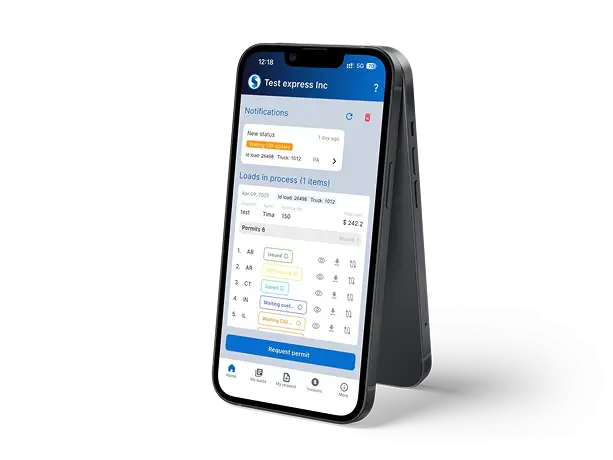
Download Omni Star and manage your permits on the go.

Can oversize loads travel at night? Explore state-by-state night travel restrictions, lighting requirements, and escort rules to help plan your next haul.
Oversize load travel windows vary by state, city, and route. Learn how rush-hour curfews and local restrictions affect interstate haul planning.
Understand US commercial truck weight limits, from gross vehicle weight to axle loads, state exceptions, and overweight permit requirements.
Can oversize loads travel at night? Explore state-by-state night travel restrictions, lighting requirements, and escort rules to help plan your next haul.
Oversize load travel windows vary by state, city, and route. Learn how rush-hour curfews and local restrictions affect interstate haul planning.
Understand US commercial truck weight limits, from gross vehicle weight to axle loads, state exceptions, and overweight permit requirements.