Free Quote

Setup


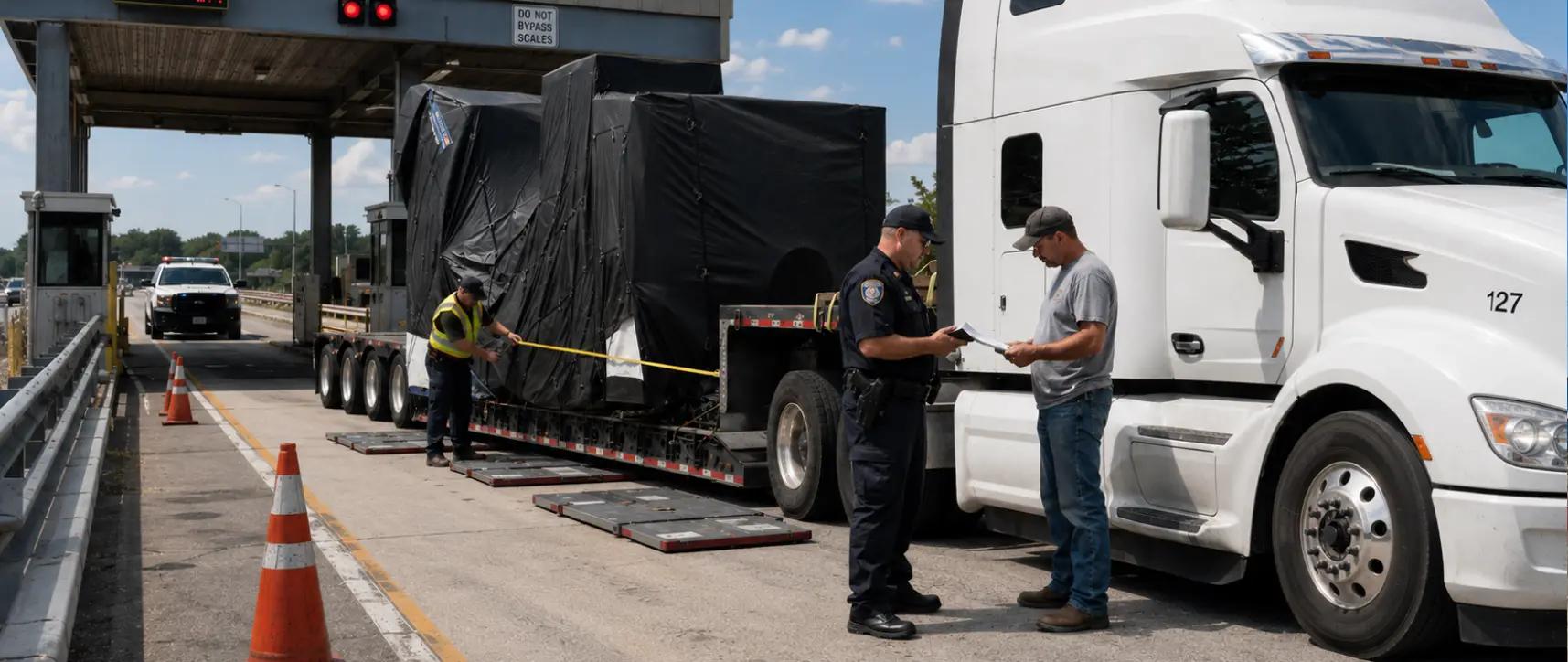
Scale house bypass transponders flash red. Weigh-in-motion highway sensors detect excessive axle pressure. Highway patrol interceptors direct combination vehicles onto static scale pads. Ignorance provides zero legal defense. Hauling unpermitted freight constitutes severe federal safety violations. Law enforcement treats unpermitted dimensions identical to reckless driving. Officers deploy physical tape measures, inspect axle spreads, verify tire ply ratings, and calculate pavement stress instantly. Missing valid paperwork triggers immediate enforcement protocols. Securing proper documents beforehand remains non-negotiable. Ignored regulations destroy operating authority and bankrupt motor carriers.
Enforcement begins with mandatory Out-of-Service (OOS) orders. Officers physically lock down equipment. Drivers surrender commercial driver licenses (CDL) and logbooks. Rigs cannot move one single inch until dispatch secures retroactive approval. Getting caught moving any dot oversize load without state authorization halts operations indefinitely. Scale masters log violations into central databases. Federal Motor Carrier Safety Administration (FMCSA) algorithms flag carrier USDOT numbers for immediate audits. Future scale house bypass privileges disappear permanently. Every future dispatched load faces mandatory physical inspection at every state border crossing.
Monetary damage escalates exponentially. States calculate truck overweight fines using brutal sliding mathematical scales. Base fines represent tiny fractions of total citations. Courts apply multiplier formulas based on exact excess poundage. Operating 10,000 pounds over legal limits triggers tier-three extreme penalties. Officers assess damages per individual axle. If tandem groups exceed 34,000 pounds, magistrates multiply base fines by every single pound registered over limits. Federal Bridge Formula violations incur separate concurrent citations. Gross vehicle weight (GVW) violations stack concurrently with individual axle violations, generating massive cumulative financial liabilities.
Dimension violations carry distinct financial consequences. Traffic judges mandate specific dot fines and penalties for width, height, and length infractions. Any fine for oversize load without permit directly reflects perceived infrastructure danger. Striking highway overpasses due to unpermitted height guarantees six-figure municipal liability lawsuits. States invoice carriers directly for bridge inspection engineering teams. Dispatchers must acquire specific dot oversize permit documents prior to dispatch to shield company assets. Unpermitted operations explicitly nullify standard freight insurance policies. Insurance underwriters invoke illegal acts exclusions. Cargo damage occurring during illegal transit falls entirely on carrier balance sheets.
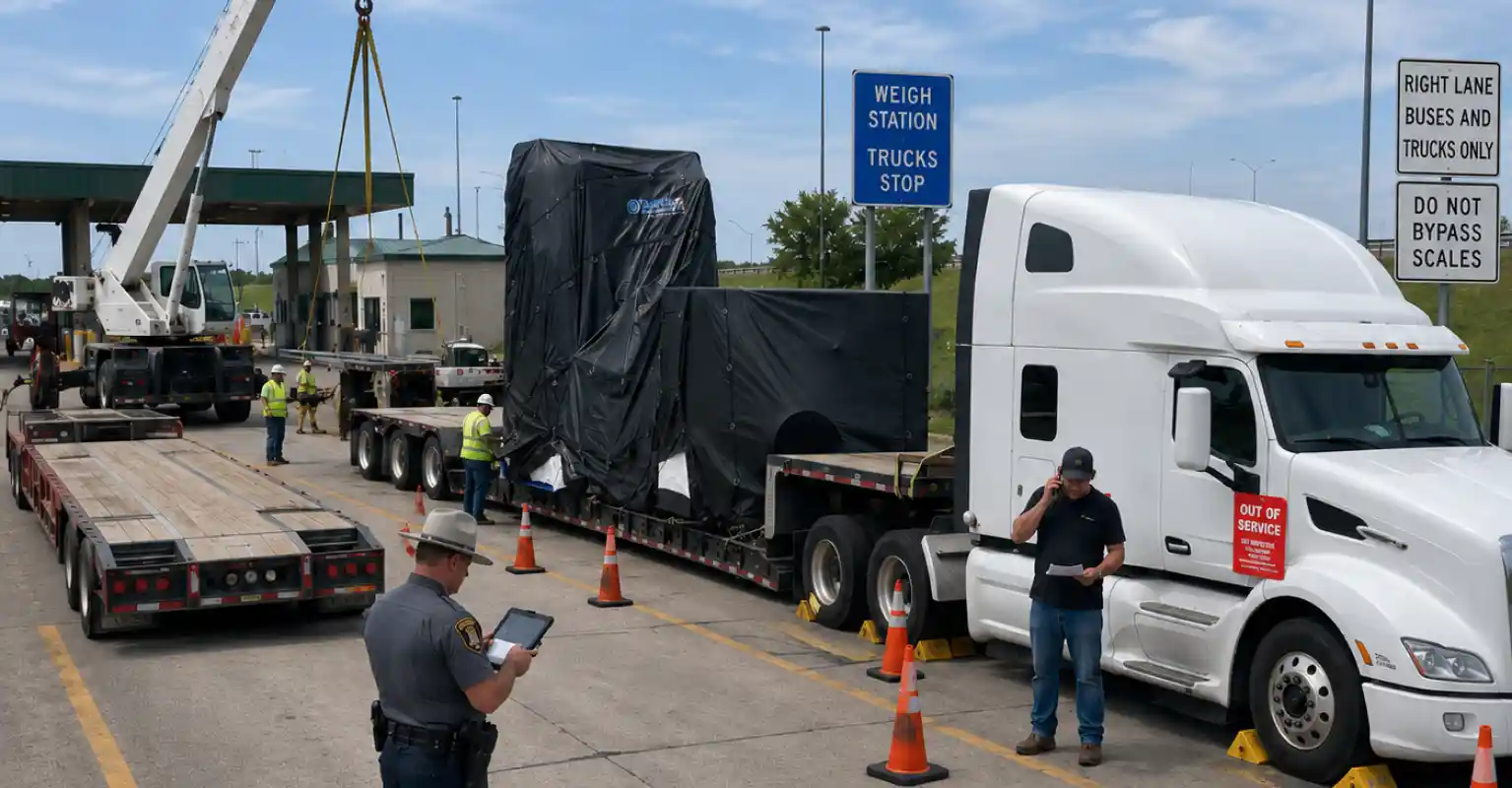
Physical containment drains operational capital rapidly. Impounded freight requires specialized recovery tactics. When officers issue dot overweight fines, states demand immediate weight reduction before releasing equipment. Carriers must hire heavy-duty commercial rotators. Dispatch sends secondary road tractors and empty step-deck trailers to scale houses. Mobile crane crews transfer payload between decks. Forced offloading operations cost thousands in hourly emergency rigging rates. Delivery timelines disintegrate. Customers reject delayed freight. Prime shippers terminate lucrative logistics contracts following unpermitted transportation incidents.
Violations infect federal safety records permanently. Commercial Vehicle Safety Alliance (CVSA) inspectors assign maximum severity weights to dimensional infractions. Moving any dot wide load illegally adds massive penalty points to carrier Compliance, Safety, Accountability (CSA) scores. High CSA scores trigger FMCSA intervention thresholds and compliance reviews. Insurance underwriters monitor these public databases daily. Premium rates skyrocket following unpermitted dimension citations. Freight brokers refuse contract freight to carriers holding elevated safety scores. Acquiring proper dot overweight permit documents prevents this permanent administrative damage and keeps fleet metrics clean.
Retroactive approvals offer zero leniency. Applying for trucking permits after getting caught sitting on scale pads guarantees maximum state scrutiny. State civil engineers process standard pre-planned applications rapidly. Caught-in-the-act applications face manual review purgatory. Routing departments investigate original travel paths. If unpermitted trucks crossed restricted bridges, states issue retroactive infrastructure damage claims. Clerks demand physical route surveys before authorizing release documents. Freight remains grounded while engineers calculate historical pavement stress and check structural integrity codes. Release requires posting massive surety bonds.
Pre-planning eliminates enforcement risks completely. Dedicated routing departments analyze payload dimensions before diesel engines start. Software matches axle spacing against live state infrastructure databases. Professional compliance teams secure legal transit documents, verifying active construction embargoes and curfew restrictions. Valid paperwork transforms weigh station encounters into routine logbook checks. Carriers control operational velocity entirely through administrative discipline. Missing documents stop freight instantly. Accurate documentation ensures legal highway transit, protects carrier safety scores, prevents catastrophic liability lawsuits, and preserves heavy haul profit margins.
The efficiency of your daily broker and ways to check their credibility
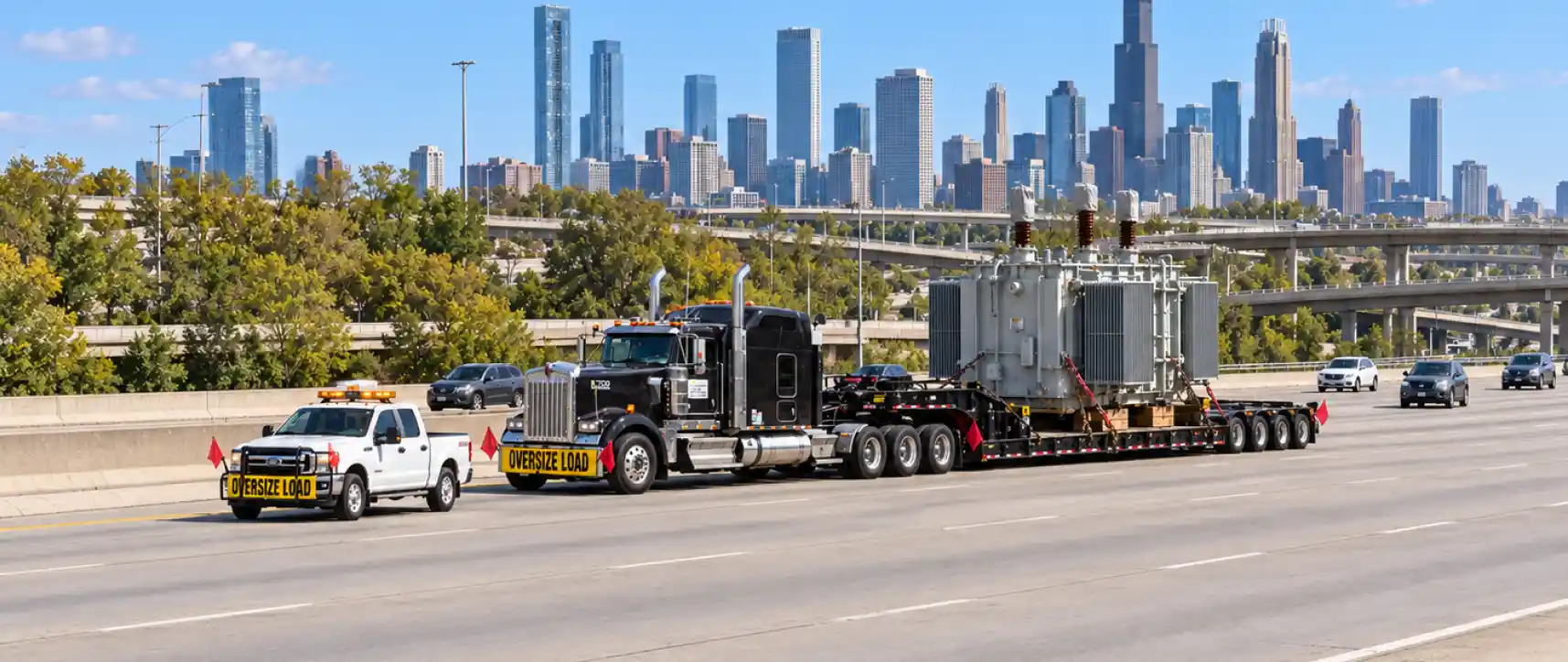
Oversize load travel windows vary by state, city, and route. Learn how rush-hour curfews and local restrictions affect interstate haul planning.
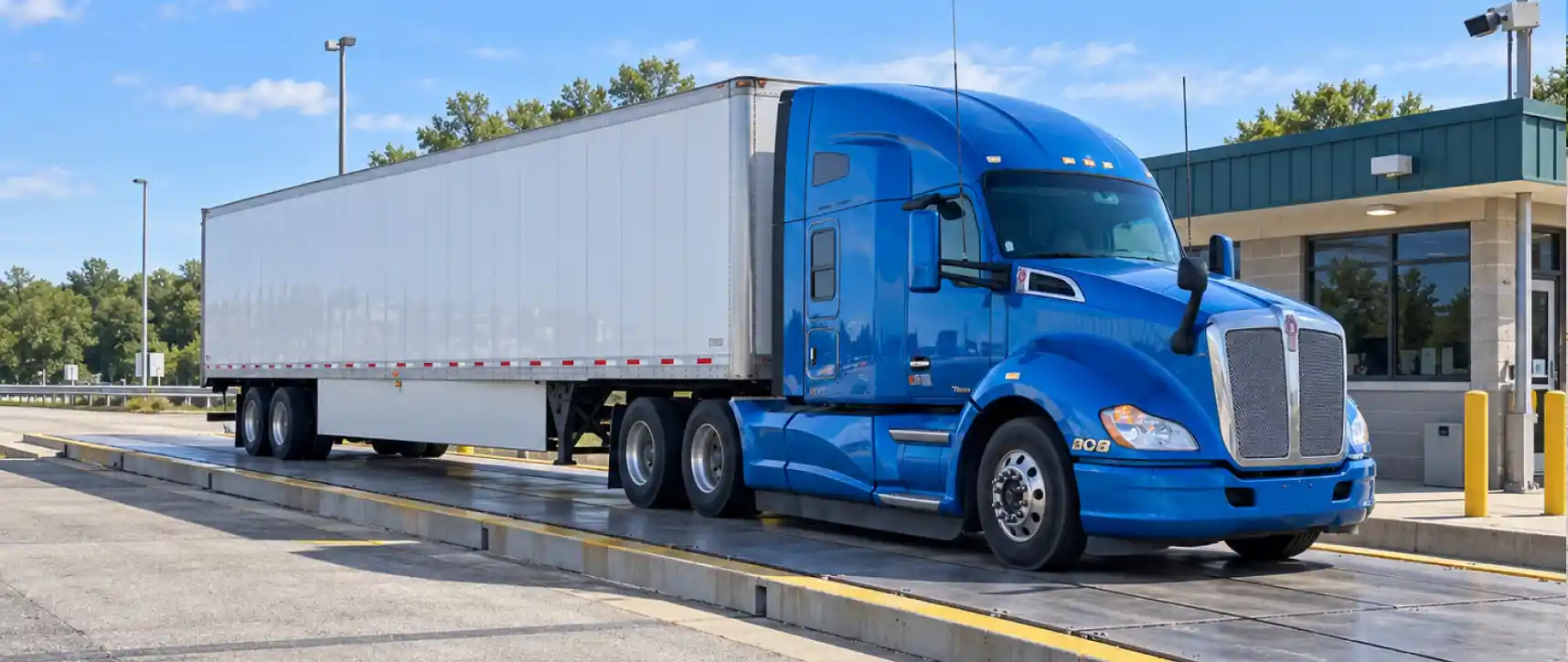
Understand US commercial truck weight limits, from gross vehicle weight to axle loads, state exceptions, and overweight permit requirements.
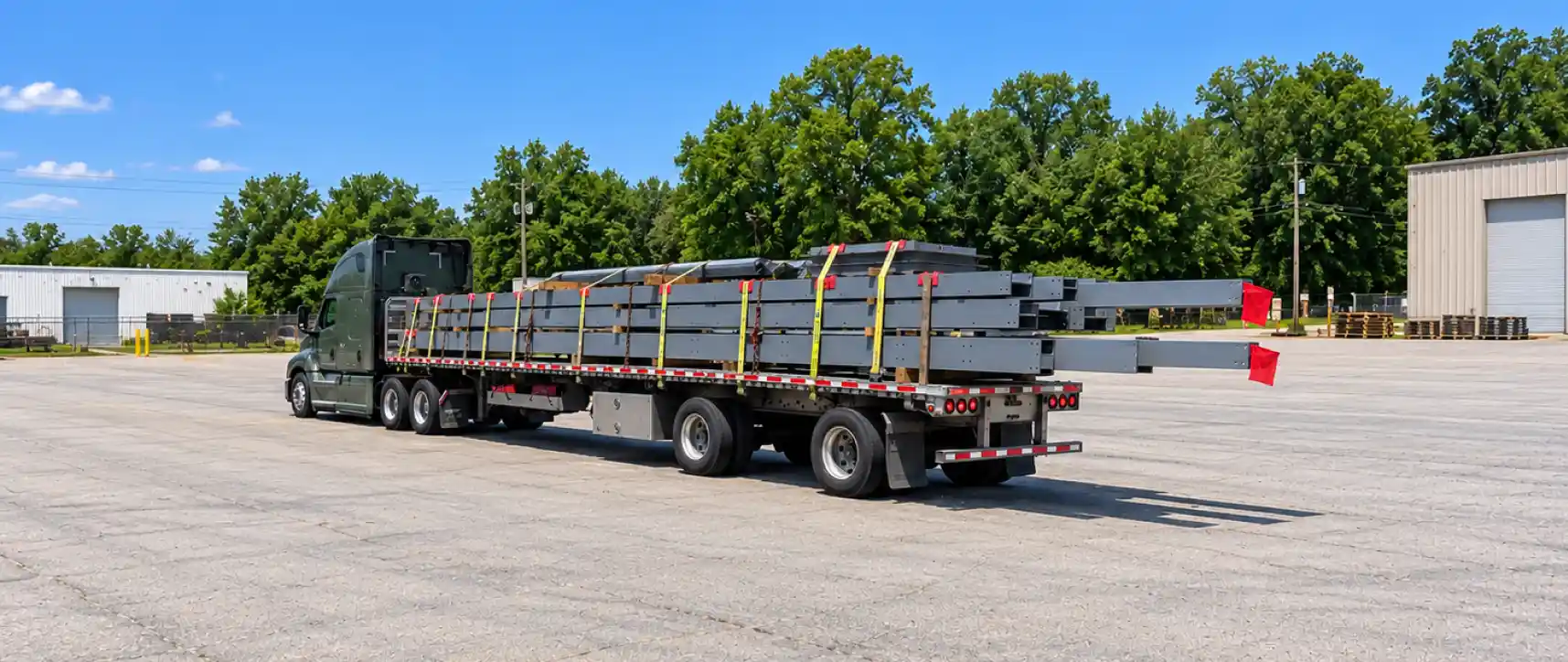
When does a long load require a permit? Learn how trailer length, cargo overhang, state rules, and escort requirements affect your next haul.
Oversize load travel windows vary by state, city, and route. Learn how rush-hour curfews and local restrictions affect interstate haul planning.
Understand US commercial truck weight limits, from gross vehicle weight to axle loads, state exceptions, and overweight permit requirements.
When does a long load require a permit? Learn how trailer length, cargo overhang, state rules, and escort requirements affect your next haul.