Free Quote

Setup


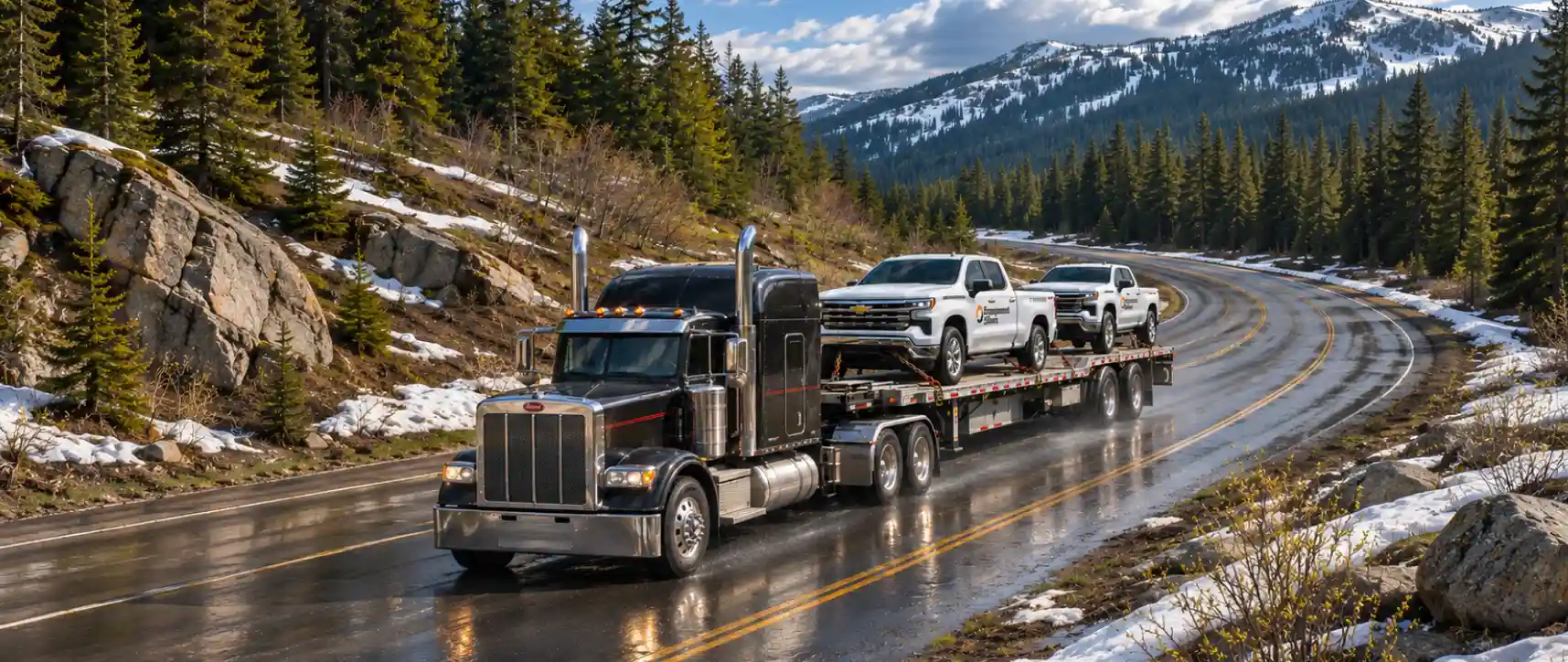
State troopers hand out weight tickets every spring to trucks running their normal winter routes. A driver hauls 80,000 pounds across a state highway in January. Everything goes fine. Two months later, he runs that same stretch and gets waved over to portable scales. Most of the time, the truck didn't change. The ground under the road did.
In the middle of winter, the soil under the asphalt freezes solid. It holds heavy traffic with no trouble. When spring warms up, the top layer thaws first while the deeper dirt stays frozen. Meltwater gets trapped right under the road with nowhere to drain. That turns the base into a wet sponge. Heavy tires make the asphalt flex and crack apart. Northern states enforce frost laws to stop that damage until the ground dries out and firms back up.
A lot of drivers assume spring weight restrictions only hit dirt and gravel roads. That isn't true. Major interstates stay open all year because they have thick roadbeds. State highways and paved county roads get posted all the time.
Once the signs go up, legal axle weights drop fast. Take a regular tandem axle that normally carries 34,000 pounds. If a state cuts weights by 35% on asphalt, that same tandem drops to 22,100 pounds. Some counties post back roads at 6 tons per axle, which caps a tandem at 24,000 pounds. Nothing on your trailer changed. You didn't add a pound of freight. Still, you just lost over 10,000 pounds of legal room.
Timing catches a lot of fleets off guard because these rules don't follow a fixed calendar. State engineers check frost tubes and ground sensors every day. A warm week in February can turn the rules on early. A late cold snap in April keeps them going for an extra month. You have to check state maps every week. A road that's open on Monday morning can have signs up by Wednesday afternoon.
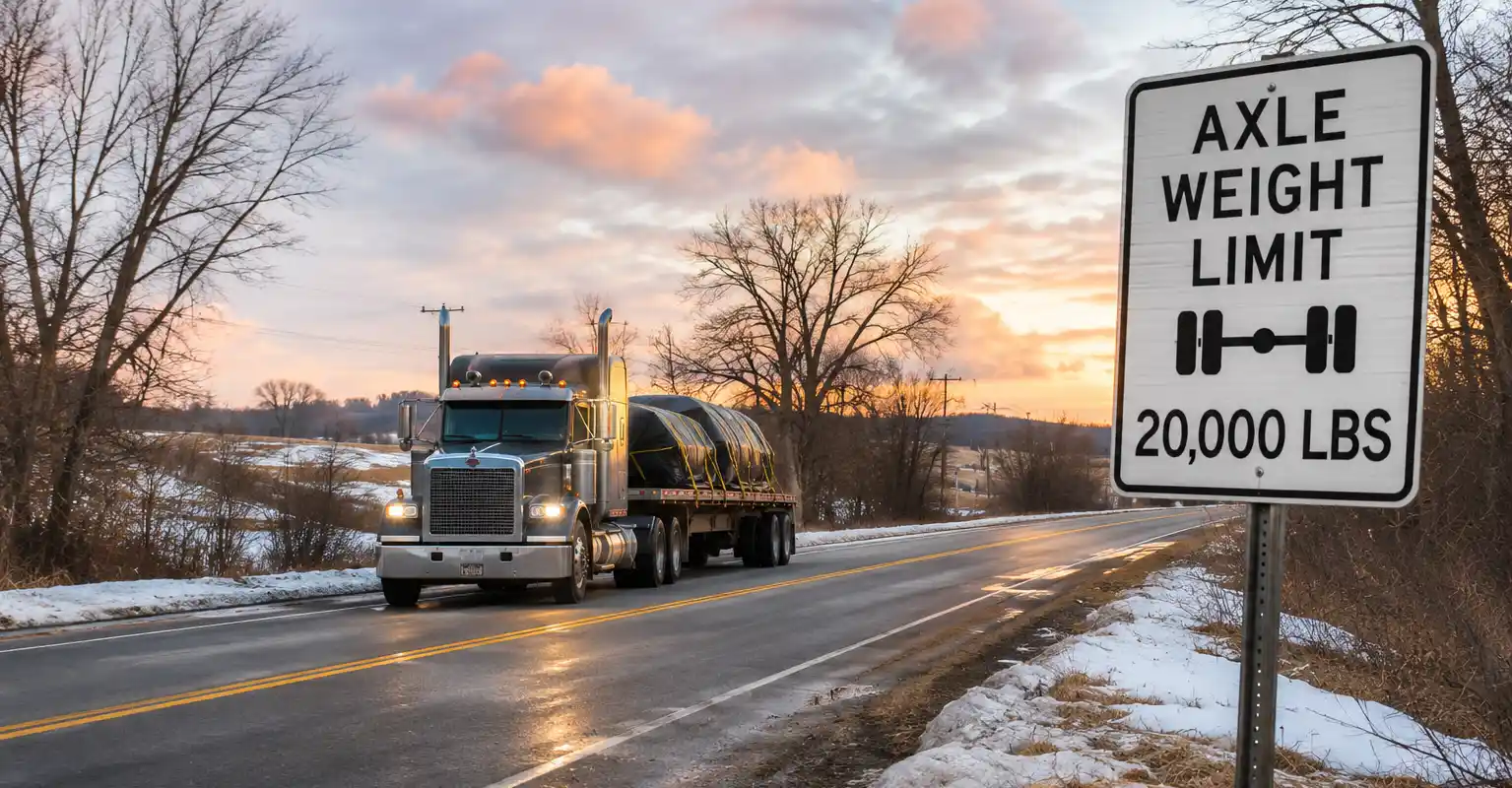
Rules for seasonal weight restrictions change as soon as you cross a state line. A load that clears one state with no trouble can get shut down ten miles into the next.
Michigan has some of the strictest rules on the map. When frost laws kick in there, non-all-season roads drop by 25% on concrete and 35% on asphalt. Trucks on those posted roads also have to stay under 35 mph. Only all-season routes keep full weight limits, so you have to check every mile before you roll.
Minnesota splits the map into six frost zones from south to north. Each zone turns on and off at different dates as the thaw moves up. A truck leaving the Twin Cities hits posted roads weeks before northern Minnesota even starts to thaw.
North Dakota and South Dakota drop state and county highways to 6 or 7 tons per axle. Both states also watch tire width in the spring. They cap how many pounds you can put per inch of tire so heavy rubber doesn't rut soft asphalt.
New England works a bit differently. States like Maine, New Hampshire, and Vermont post roads one by one. Local town road bosses can restrict a stretch whenever the pavement gets soft. You might clear the state highway just fine, then hit a posted town road two miles from your drop.
Staying on the interstate doesn't always save you from seasonal load restrictions. Your first and last few miles usually sit on state or county roads. You still have to get from the exit ramp to the yard or job site. That's where heavy trucks get trapped.
The thaw also changes how states handle overweight permits. Most northern DOTs stop issuing divisible load permits on back roads during the spring. For non-divisible heavy loads, permit offices either lower the max weight per axle or block non-all-season roads from the route.
Expect long detours in March and April. State engineers push heavy loads onto thicker all-season highways. A single posted stretch can add 60 or 100 miles to a trip, which eats into your fuel budget and pushes back delivery. Some states also hold permits until cold night air refreezes the ground. Then they let you move early in the morning before the sun softens the road again.
State troopers and county deputies watch posted roads closely once the thaw starts. They know drivers try to cut through back roads to save miles. Officers set up right on the shoulder with portable wheel scales.
The fines hurt a lot more than normal weight tickets. Officers calculate the penalty from the reduced spring limit, not the standard 80,000-pound cap. Roll across a 6-ton road with a loaded tandem, and you're thousands of pounds over on the spot. In states like Michigan and Minnesota, those fines hit several thousand dollars fast. Once the officer shuts you down, the truck stays parked until you split the load or bring in another trailer.
Permit offices and county deputies don't give leeway on spring postings. Check the state DOT frost map before you quote a northern load between February and May. Make sure the pickup and delivery both sit on all-season roads. If you have to cross a posted county stretch, call the local road office before the truck leaves the yard. Sometimes a county gives a single-trip pass for early morning runs. Other times you have to wait or switch to a trailer with more axles to spread the weight out.
Checking frost maps upfront takes five minutes and saves you from getting shut down on the roadside. Omni Star tracks state frost zones, road postings, and all-season routes for busy fleets. We check your route upfront and pull the permits you need to keep trucks moving.
The efficiency of your daily broker and ways to check their credibility
Get help with oversize permits and route planning. Call our team to get started.
Download Omni Star and manage your permits on the go.
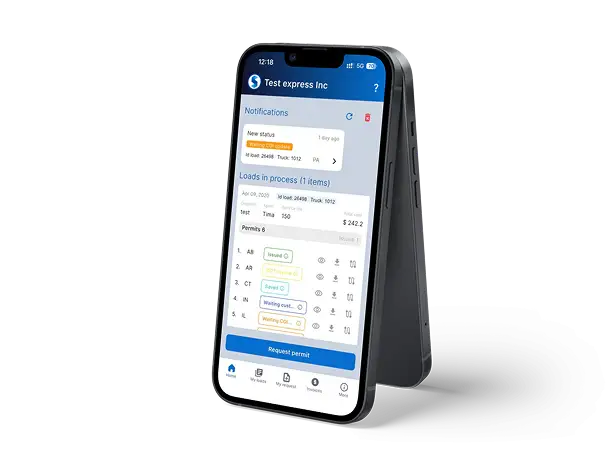

Save time and reduce manual data entry with the Omni Star Permit Request API. Connect your TMS directly to our system to submit permit requests, validate shipment details, and track orders without entering the same information twice.
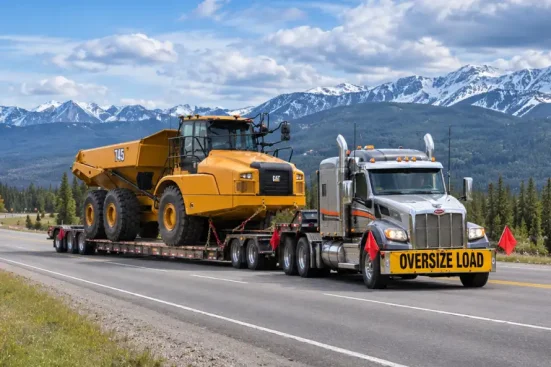
Learn about maximum legal trailer width, state-specific restrictions, and when you need an oversize permit to transport wide loads across the United States.
Learn how the Federal Bridge Formula affects axle weight limits, bridge spacing, and overweight permits. Avoid violations and plan legal heavy-haul routes
Save time and reduce manual data entry with the Omni Star Permit Request API. Connect your TMS directly to our system to submit permit requests, validate shipment details, and track orders without entering the same information twice.
Learn about maximum legal trailer width, state-specific restrictions, and when you need an oversize permit to transport wide loads across the United States.
Learn how the Federal Bridge Formula affects axle weight limits, bridge spacing, and overweight permits. Avoid violations and plan legal heavy-haul routes