Free Quote

Setup


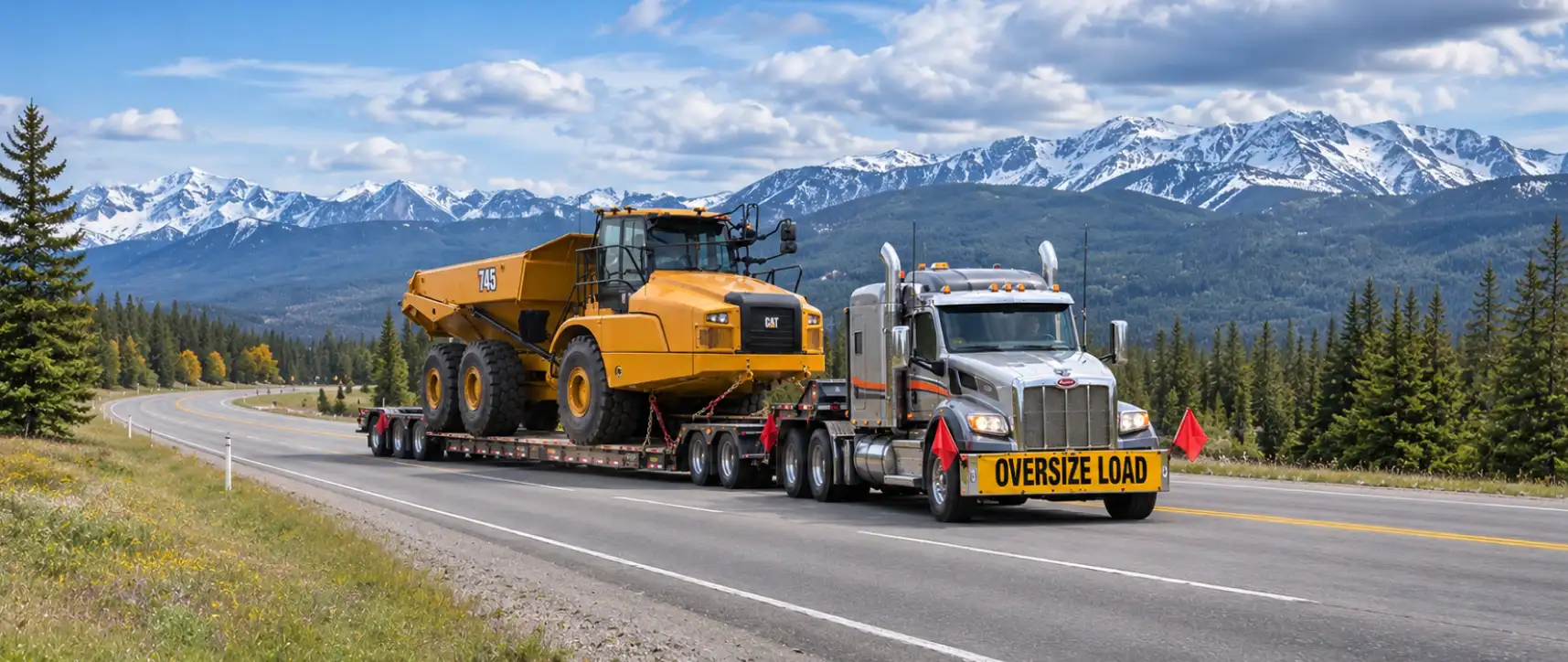
Scale houses hand out width tickets every week to drivers hauling regular flatbeds. A driver loads a machine at a shipper's yard, checks his chains, and rolls onto the interstate. Everything looks fine in his mirrors. Fifty miles down the road, a DOT officer pulls out a tape measure and puts his truck out of service. Most times, a driver didn't realize a few inches of overhang pushed him past the maximum legal trailer width.
Federal highway law sets a standard width cap at 102 inches, or 8 feet 6 inches. That rule covers the National Network, which includes interstates and major federal highways. It keeps commercial trucks safely inside standard 12-foot lanes. Once your rig goes past that 102-inch mark, you can't run legally without state paperwork.
A lot of dispatchers mix up deck size with freight size. Legal width on a trailer is only half of what an officer measures at a scale. You can pull a standard 102-inch step-deck or a 96-inch flatbed, and that empty trailer is fine. Once you set a wide crate or a wheel loader on that deck, measurements shift to the widest point of your load.
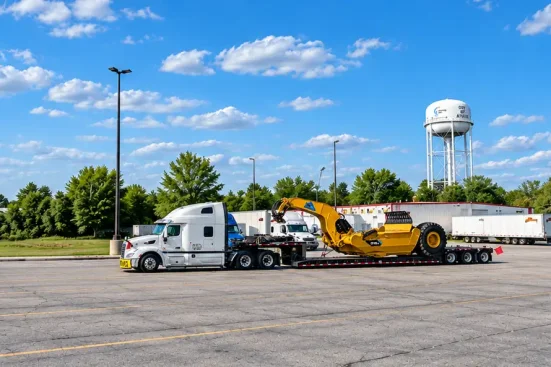
Say you run a 96-inch flatbed and haul a piece of equipment that measures 100 inches across. Two inches hang over each rub rail. Even with that overhang, your total width is still 100 inches, so you stay under the 102-inch legal trailer width on federal roads. Now take a 102-inch trailer and load an excavator whose tracks measure 106 inches across. That trailer itself is legal, yet your cargo puts you 4 inches over the cap.
Federal rules do give you a small break on safety gear. Side mirrors, turn signals, and basic tie-down hardware like chain binders or ratchet handles don't count toward your width. Federal rules allow up to 3 inches on each side for basic tie-down gear. Still, that break only covers hardware. If a loose tarp balloons out in the wind, or if a steel bracket sticks out past a rub rail, officers count it as part of that load.
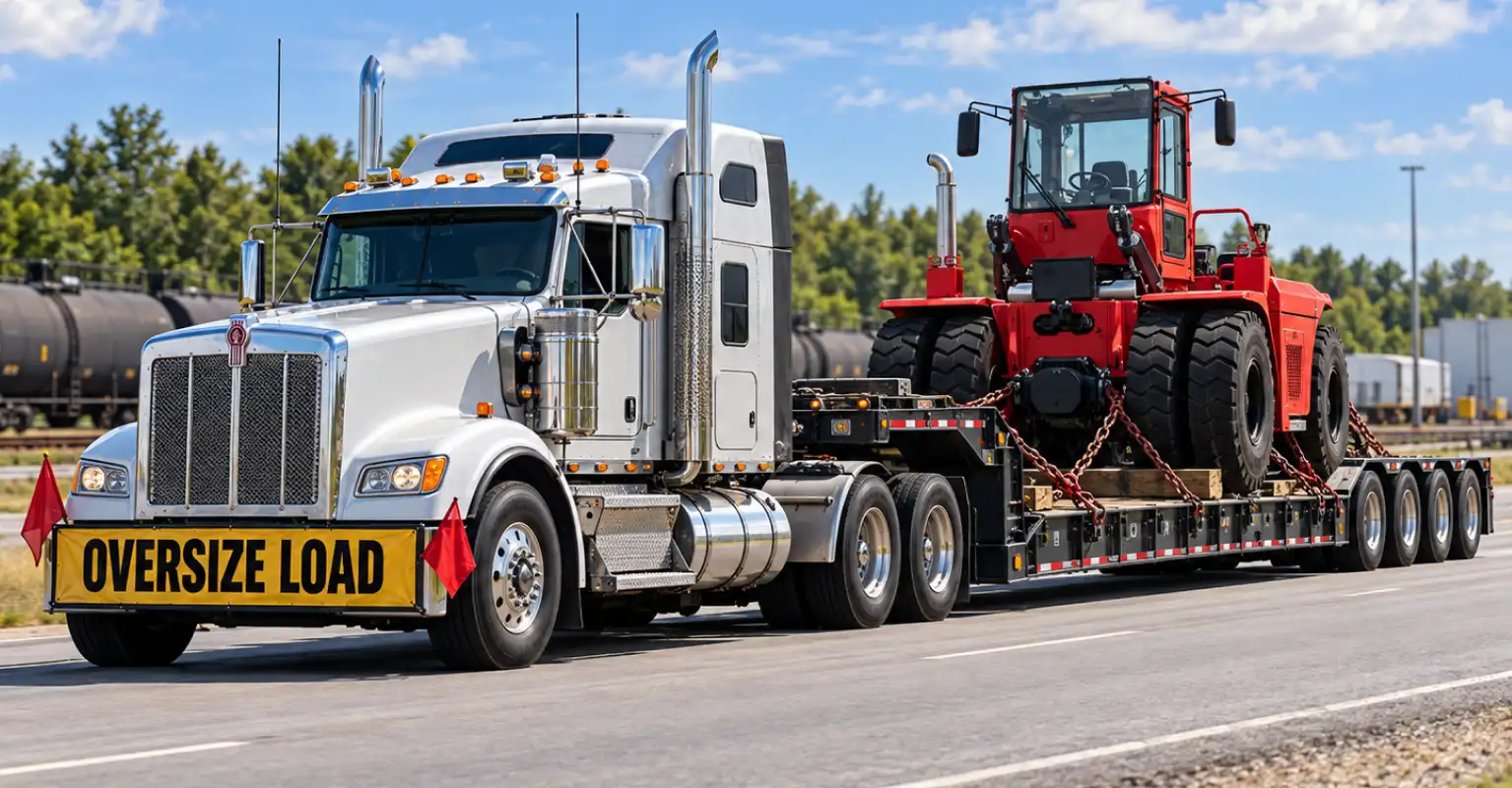
That 102-inch rule works on major interstates, yet maximum trailer width isn't the same on every U.S. road. Once you leave the National Network and turn onto state highways or county roads, local rules take over.
Hawaii sits on the high side of the map. State law there sets a standard trailer width limit at 108 inches, or 9 feet, on most roads. That gives local fleets six extra inches of room compared to the mainland.
On the mainland, state rules usually go the other way and drop you down to 96 inches, or 8 feet. New York trips up out-of-state fleets constantly. Outside of designated truck routes and interstates, New York City streets and many local highways cap legal width at 96 inches. A standard 102-inch dry van can be legal on I-95 and illegal two blocks after taking a wrong exit.
Older rural routes in states like West Virginia, Kentucky, and parts of Pennsylvania also keep 96-inch limits on narrow two-lane roads. These older highways often have 9-foot or 10-foot lanes with tight shoulders and rock walls. Running a 102-inch trailer down a 96-inch posted road can get you a ticket even when your freight doesn't hang over either side at all.
Any time your trailer or cargo goes past 102 inches on federal roads, or past 96 inches on a posted local road, you need a wide load permit before your wheels turn. You can't buy a permit at a scale house after you get pulled in.
States are also strict about what kind of cargo qualifies. Just like with heavy freight, states only issue oversize permits for non-divisible loads. You can pull a permit for a wide bulldozer, a precast concrete wall, or a boat hull that can't be taken apart. You won't get a permit if you set two 54-inch pallets side by side on a flatbed to hit 108 inches. State offices expect you to turn those pallets or load them in a single row instead of hanging them past your deck edge.
When an application goes in, state DOT staff check your exact width against every mile of that route. Road work zones cause the biggest headaches here. A highway might fit a 14-foot load on a normal day, yet concrete barriers in a work zone can squeeze a lane down to 11 feet. If your load won't fit through those barriers, the state routes you around that project or denies your permit.
Getting a permit approved is only step one. Running over-width almost always calls for extra safety gear on your truck, and rules change as soon as you cross a state line.
Most states require 18-inch red or bright orange flags on all four load corners, plus on the widest outer spots. Once you go past 8 feet 6 inches or hit 10 feet wide, depending on each state, you also need "OVERSIZE LOAD" banners on your front bumper and the back of your trailer. Many states require flashing amber lights on cab roofs as well.
Wider loads trigger pilot car rules. On multi-lane interstates, most states require at least one escort car once you pass 12 feet wide. On narrow two-lane roads, some states require a front pilot car starting at just 10 feet wide. Travel hours tighten up too. Over-width trucks usually have to run during daylight hours, from half an hour before sunrise to half an hour after sunset. Most big cities also enforce rush-hour curfews to keep wide loads out of commuter traffic.
Permit offices don't give leeway on bad guesses. Don't trust a shipper's spec sheet alone. Factory brochures often list a machine's base width without its blade, bucket, or side steps attached. If a permit says 10 feet 6 inches and an officer's tape reads 10 feet 10 inches at the scale, that permit is void on the spot. That truck stays parked until you pull a new permit and pay the fine.
Taking five minutes to walk around your trailer with a tape measure saves you from getting shut down on the roadside. Omni Star checks state width rules, work-zone pinch points, and escort requirements for busy fleets every day. We verify your load measurements upfront and pull the permits you need to keep trucks moving.
The efficiency of your daily broker and ways to check their credibility
Get help with oversize permits and route planning. Call our team to get started.
Download Omni Star and manage your permits on the go.
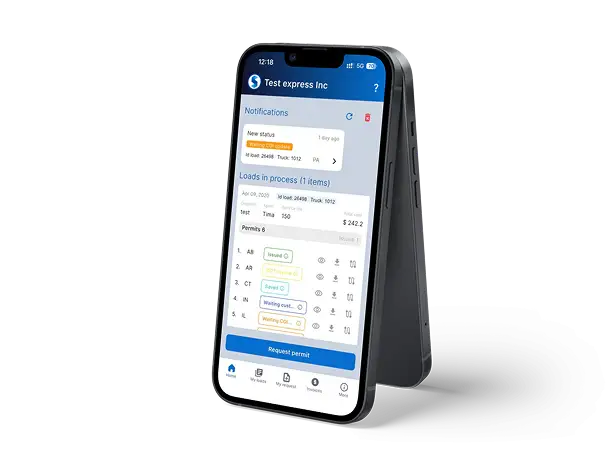

Save time and reduce manual data entry with the Omni Star Permit Request API. Connect your TMS directly to our system to submit permit requests, validate shipment details, and track orders without entering the same information twice.
Learn how frost laws and seasonal weight restrictions affect truck axle limits, overweight permits, and route planning. Avoid costly fines and spring hauling delays
Learn how the Federal Bridge Formula affects axle weight limits, bridge spacing, and overweight permits. Avoid violations and plan legal heavy-haul routes
Save time and reduce manual data entry with the Omni Star Permit Request API. Connect your TMS directly to our system to submit permit requests, validate shipment details, and track orders without entering the same information twice.
Learn how frost laws and seasonal weight restrictions affect truck axle limits, overweight permits, and route planning. Avoid costly fines and spring hauling delays
Learn how the Federal Bridge Formula affects axle weight limits, bridge spacing, and overweight permits. Avoid violations and plan legal heavy-haul routes