Free Quote

Setup


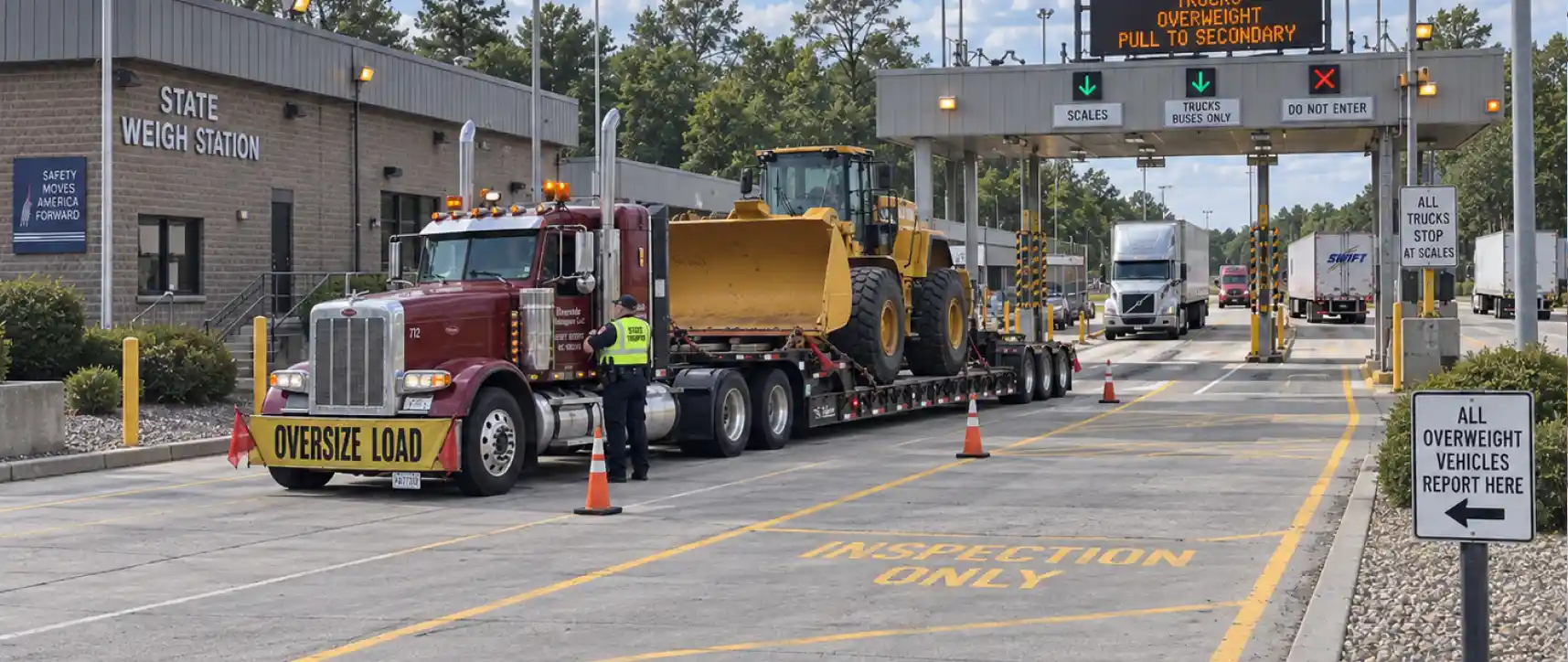
Navigating commercial weigh stations forms a routine part of daily freight operations. Triggering red lights on scale bypass systems, however, immediately halts supply chain progress. Any time WIM sensors or static scales register illegal mass, highway patrol officers immediately force commercial rigs into holding lots. This specific event plunges fleet managers and owner-operators into brutal sequences involving administrative citations, logistical paralysis, and mandatory mechanical adjustments. Mastering specific recovery procedures after weight violations remains crucial for defending operational profitability and maintaining flawless safety profiles.
Once parked in secondary lots, drivers must present required credentials to Department of Transportation (DOT) personnel. Inspections include Commercial Driver’s License (CDL) verification, vehicle registration, International Fuel Tax Agreement (IFTA) documentation, electronic logging device (ELD) records, and bills of lading. Scale masters cross-reference actual scaled weight against Federal Bridge Gross Weight Formula standards. Federal regulations cap single axles at 20,000 pounds, tandem groups at 34,000 pounds, and maximum gross vehicle weight at 80,000 pounds. Exceeding these exact boundaries requires specialized state exemptions.
Discovering mass overages never results in simple traffic warnings. Law enforcement officers issue formal citations and place commercial vehicles under strict Out of Service (OOS) orders. Equipment remains legally grounded on government property until carriers physically correct weight distribution. Furthermore, detained trucks frequently undergo comprehensive Level 1 CVSA safety inspections while parked. Inspectors slide underneath commercial trailers, examining pushrod stroke limits, checking air reservoir integrity, and verifying gladhand connections. Such thorough examinations drastically increase risks of officers discovering additional mechanical defects regarding brakes, suspension components, or tire tread depth.
Modern highway enforcement relies heavily on advanced technological systems. Weigh-In-Motion (WIM) systems utilize piezoelectric sensors embedded directly within highway concrete to calculate axle weights dynamically at highway speeds. When sensors detect potential anomalies, automated signs direct flagged vehicles toward static scales for precise verification. State patrols also deploy portable wheel-load weighers during targeted enforcement campaigns. Commercial drivers cannot simply bypass fixed inspection facilities by taking back roads. Roving DOT units frequently set up temporary checkpoints along rural routes, catching unauthorized loads off guard. These mobile units utilize ultra-thin portable scales to measure individual wheel groups, ensuring strict compliance across all transit pathways.
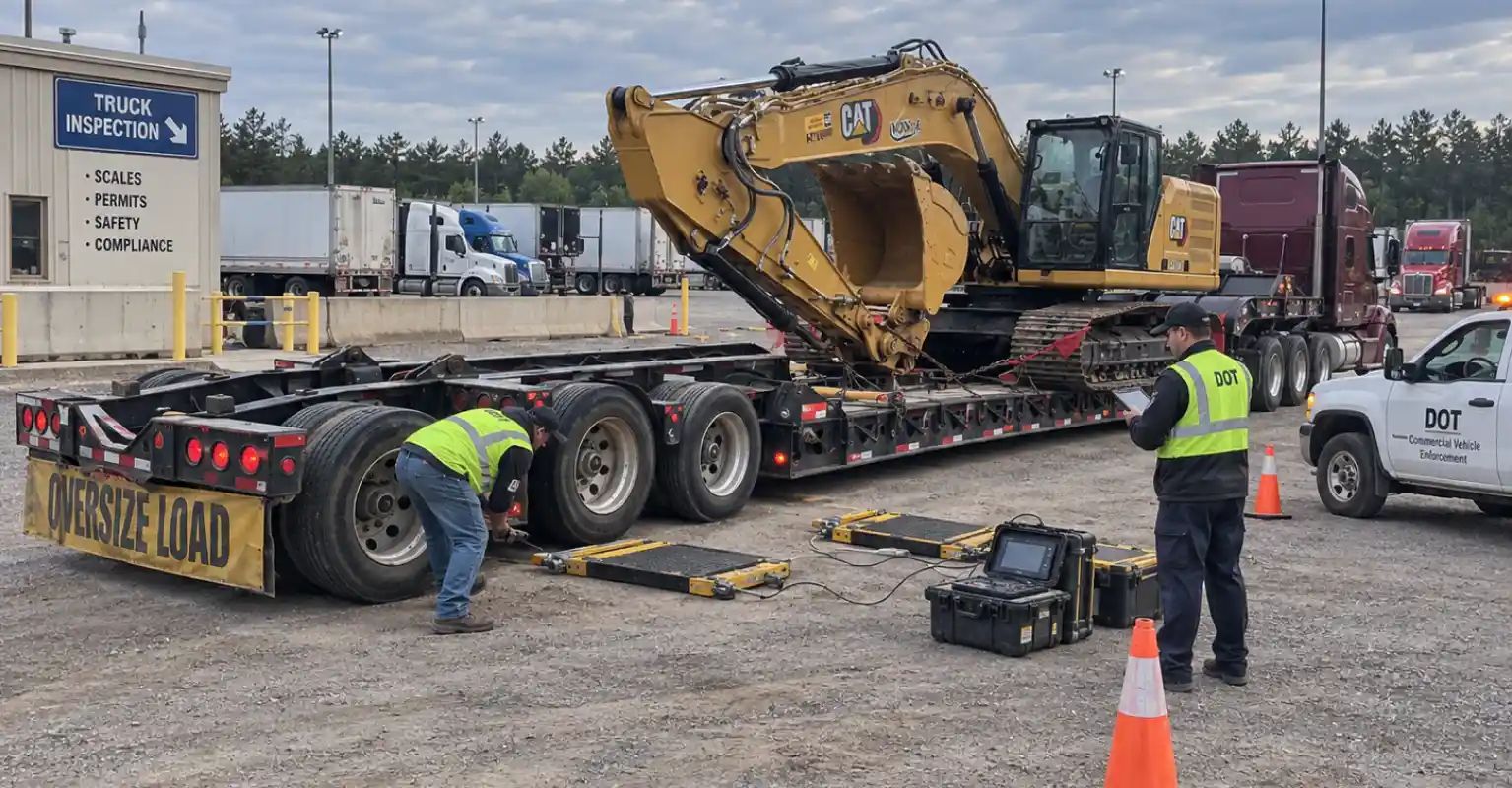
Carriers absorb immediate financial damage through administrative citations. Standard dot overweight tickets vary drastically across different jurisdictions because state legislatures independently determine infrastructure protection penalties. Courts typically calculate final financial blows using standard base processing fees combined with escalating per-pound charges for excess mass.
Southern freight corridors maintain particularly aggressive enforcement protocols. Receiving an overweight ticket texas style guarantees significant financial impact for motor carriers. Local transport authorities calculate overweight tickets in Texas according to rigid, tiered systems based on exact pounds over legal limits. While minor weight discrepancies might cost several hundred dollars, severe commercial violations push Texas overweight tickets into multiple thousands and frequently mandate direct court appearances by company safety directors.
Central logistics hubs enforce similarly strict standards. Transporting unbalanced loads triggers heavy Illinois overweight tickets, which strictly penalize improper tandem weight distribution even when total gross weight complies with federal limits. Neighboring jurisdictions utilize identical logic; overweight tickets in Missouri strictly target bridge formula violations to prevent accelerated pavement degradation on major interstate routes.
Moving freight along coastal highways introduces even more complex penalty structures. A standard Virginia overweight citation involves base administrative costs, escalating per-pound penalty tiers, and specialized liquidated damages specifically designated for highway repair funds. On western seaboards, state patrols protect aging bridge infrastructure with zero tolerance. Fleet dispatchers consider California overweight tickets among America's most damaging financial penalties. Single severe infractions in western regions can easily erase net revenue of multiple consecutive cross-country loads.
Paying financial penalties does not release grounded trucks. Dispatchers must execute immediate corrective action before vehicles can re-enter highway traffic. Resolutions depend entirely on freight characteristics and trailer configurations.
For divisible loads (such as palletized goods or dry van freight), drivers can often correct axle overages through mechanical adjustments. Sliding trailer tandems backward or forward shifts weight between drive axles and trailer axles. Moving fifth wheels can similarly transfer mass between steer tires and drives. If mechanical adjustments prove insufficient to balance loads, carriers must hire local emergency forklift services. These crews arrive at DOT lots to physically restack pallets inside trailers.
If gross weight exceeds maximum capacity, carriers must dispatch secondary rescue trucks to cross-dock excess cargo. Coordinating transfer operations involves securing third-party cross-docking partners, verifying cargo insurance limits, and rearranging delivery appointments. Utilizing secondary tractors essentially doubles transportation costs for specific deliveries, turning profitable lanes into massive financial losses.
Attempting to abscond from DOT lots before officially clearing OOS orders constitutes a severe federal offense. Drivers caught operating red-tagged equipment face immediate arrest, permanent CDL disqualification, and massive corporate ticket. Dispatchers instructing drivers to leave scale properties illegally risk severe criminal liability. Therefore, strict adherence to protocol remains mandatory. Safety directors must establish clear communication channels, ensuring drivers never move compromised equipment until local authorities formally lift all restrictions.
Scale house violations inflict permanent damage on motor carrier safety profiles. High Compliance, Safety, Accountability (CSA) scores directly increase commercial insurance premiums and deter premium freight brokers from awarding lucrative contracts. Automated broker platforms routinely lock out carriers possessing poor safety data. To comprehend broader legal risks affecting carrier reputation, safety managers should review our detailed analysis covering what happens if DOT stops you without a permit.
Commercial transportation markets operate on margins too thin to absorb preventable government penalties. Carriers hauling heavy machinery, construction materials, non-divisible industrial components, or dense freight must verify route restrictions prior to dispatch. State departments offer various exemption types for non-divisible cargo. Professional dispatchers always verify bridge capacities, vertical clearances, and construction zones prior to requesting route authorization. Processing windows change dramatically between jurisdictions. Scrambling for retroactive paperwork while physically grounded on state property remains a guaranteed failure.
Securing authorized overweight permits provides legal clearance required to bypass weigh station delays safely. Omni Permits processes fast, accurate, and fully compliant routing documents, allowing modern fleets to protect safety scores, avoid crippling ticket, and maintain uninterrupted supply chain operations.
The efficiency of your daily broker and ways to check their credibility
Get help with oversize permits and route planning. Call our team to get started.
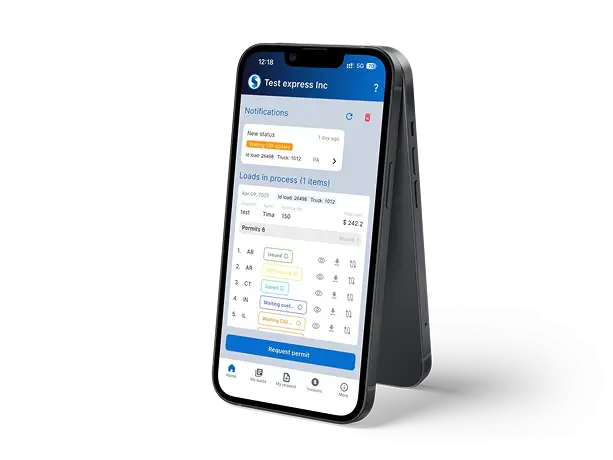
Download Omni Star and manage your permits on the go.

Can oversize loads travel at night? Explore state-by-state night travel restrictions, lighting requirements, and escort rules to help plan your next haul.
Oversize load travel windows vary by state, city, and route. Learn how rush-hour curfews and local restrictions affect interstate haul planning.
Understand US commercial truck weight limits, from gross vehicle weight to axle loads, state exceptions, and overweight permit requirements.
Can oversize loads travel at night? Explore state-by-state night travel restrictions, lighting requirements, and escort rules to help plan your next haul.
Oversize load travel windows vary by state, city, and route. Learn how rush-hour curfews and local restrictions affect interstate haul planning.
Understand US commercial truck weight limits, from gross vehicle weight to axle loads, state exceptions, and overweight permit requirements.